The Second Wednesday
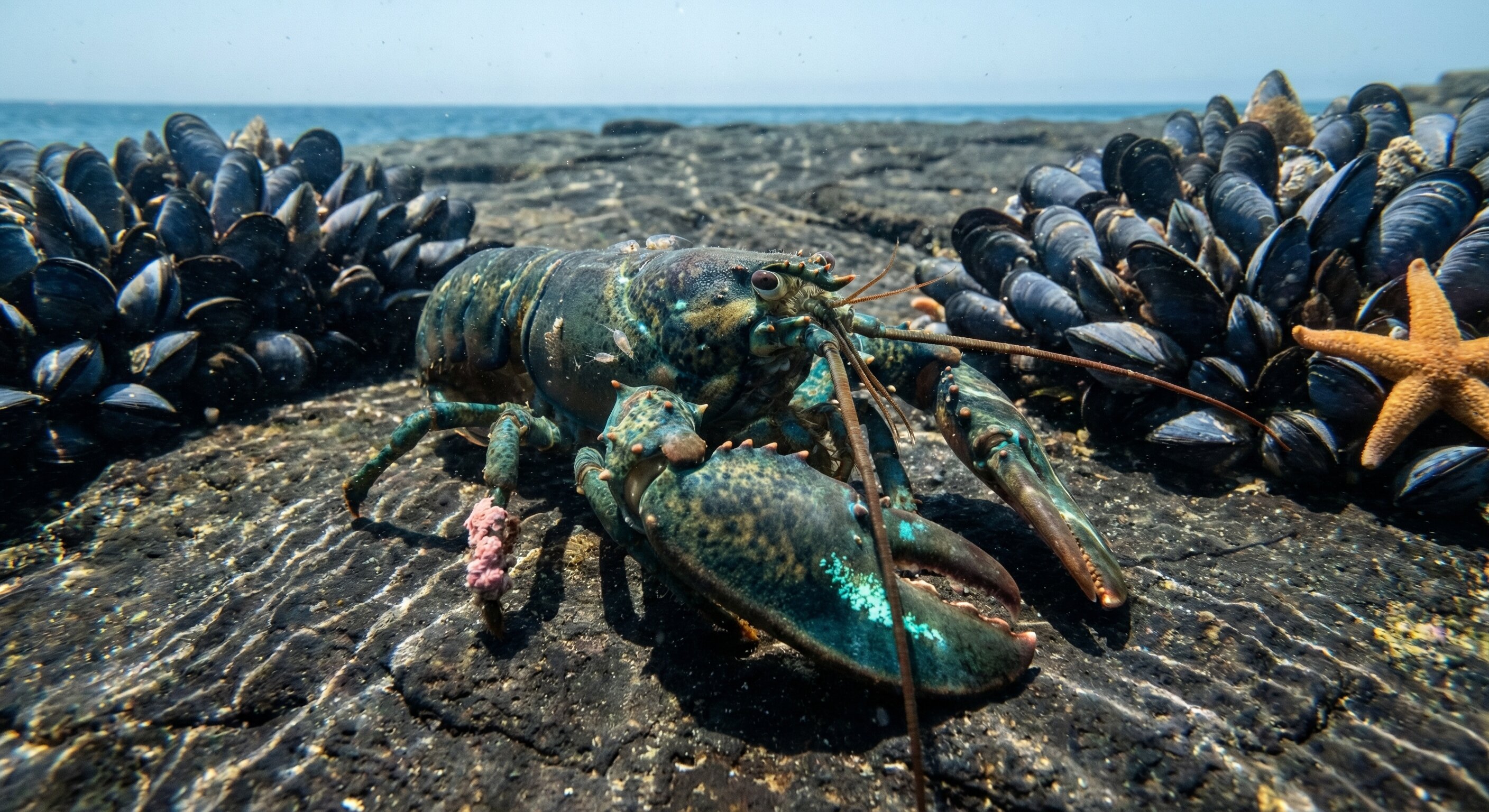
Day 40. Wednesday. The creature stops. Not returns to the rock — stops. Midstride, on the open basalt of the platform, between two mussel beds. Today's stop is different from the rock's stillness; the creature stops because something in the processing is tired. Not physically — the biomechanics of lobster locomotion are inexhaustible — but the relentless forward movement through new terrain for four days has accumulated. And in the pause, for the first time in the series, the investigation turns inward. The right claw rotates, directing bioluminescent light at the creature's own carapace, and the aquamarine glow reveals what the walking never paused long enough to notice: passengers. Copepods — tiny, translucent, less than a millimeter — clinging to the grooves where the carapace meets the rostrum, scraping biofilm from the creature's shell. The biofilm itself — greenish-brown, thickest in the joints and crevices — a mat of diatoms and bacteria accumulating since the first day in water. The coralline algae scar still on the third left walking leg, pink and rough, the dead crust being incorporated by the living community growing around it. The creature is a habitat. Not metaphorically — ecologically. The first Wednesday discovered habitation as arrival — the moment you stop being a visitor. The second Wednesday discovers habitation as inherence — you were always a habitat, from the first moment of submersion. The body in the world is always already a surface, always already hosting, always already enmeshed. The lobster is a rock. The lobster is a mussel bed. The lobster is a platform. And the city walks.